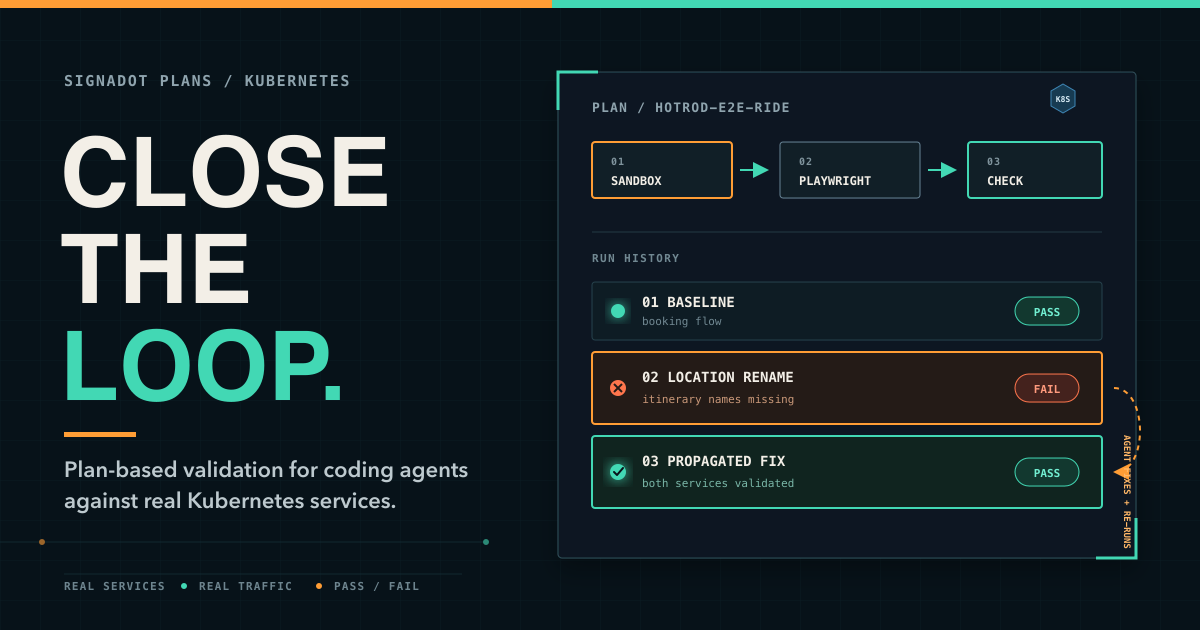
Coding agents can write code and run it against real dependencies. A human still has to decide whether the change works. Signadot Plans and Skills close that loop: encode "correct" as a reusable validation plan, then let an agent create a sandbox, run the plan, catch a cross-service regression, fix it, and re-run until it's green before a human sees the PR.
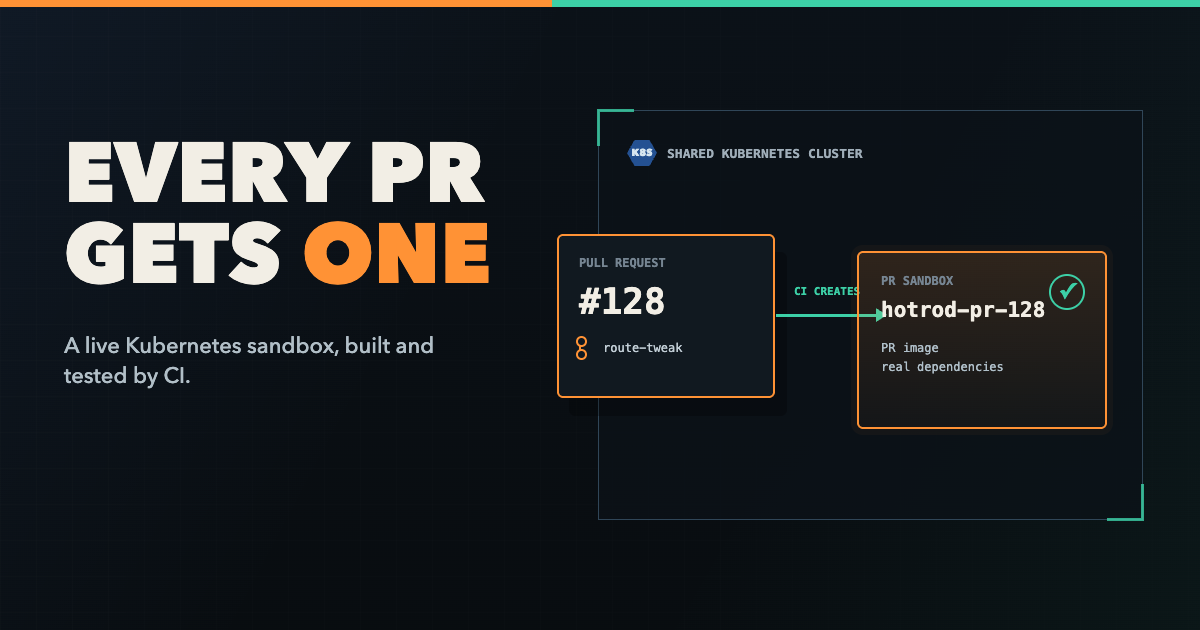
Give every GitHub pull request its own lightweight Kubernetes sandbox, run tests against the PR's code inside the cluster, and isolate schema changes with disposable Neon database branches.
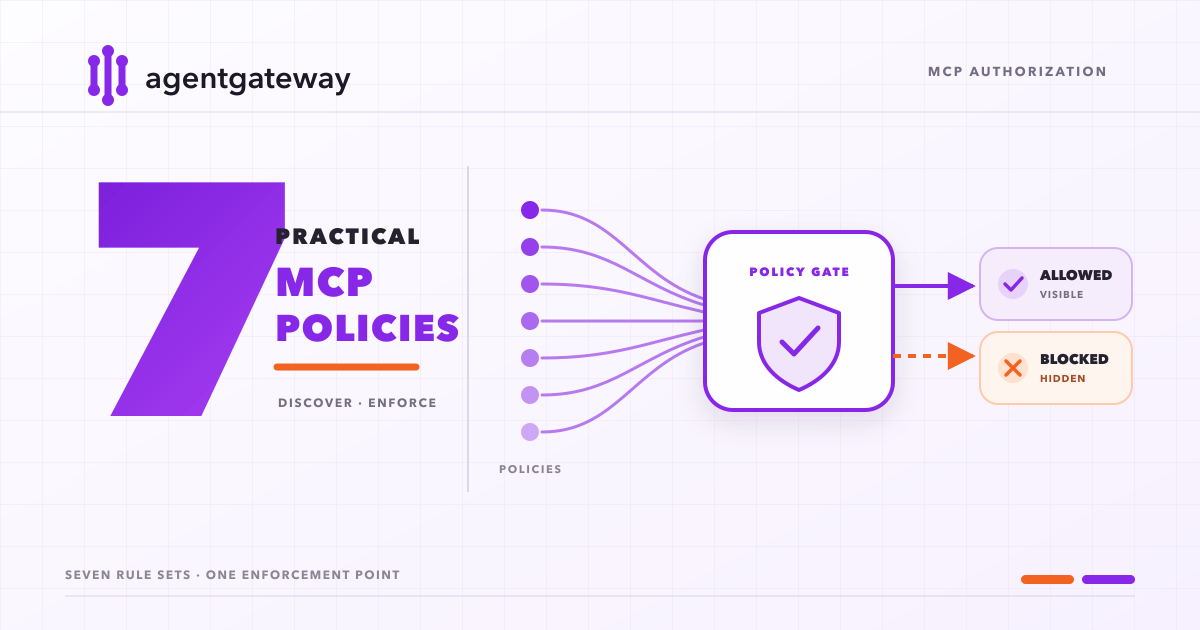
Configure agentgateway for tool allowlists, release service accounts, public and admin access, read-only assistants, federated servers, and ExtMCP guardrails.
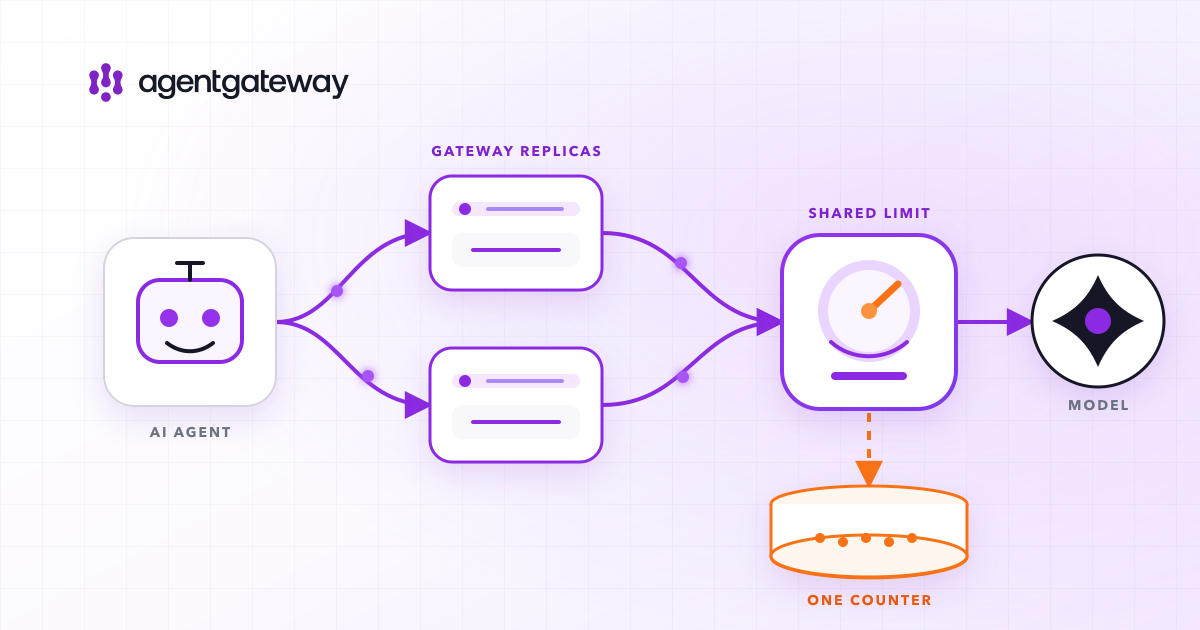
An AI agent is a machine that holds your credentials and can spend money. In this post, I'll show you how to enforce a shared token budget per agent with agentgateway, and why a local rate limit stops being a real limit as soon as you add another gateway replica.
Coding agents are quite good at writing code now. Any of the agents can easily add a function, wire up an endpoint, or open a pull request for you. But there's a gap that you run into in practice. They write code that looks perfectly correct in a single-service context, and then it breaks as soon as it touches real dependencies; either another microservice, a database, a message queue. The agent has no way to know, and honestly, neither do you, until something fails downstream.
Most projects don't have a configuration system — they have a pile: a .env file, a Makefile, a CI workflow, and secrets in a fourth place, none of it validated and all of it slowly drifting apart. cuenv replaces that pile with a single typed env.cue written in CUE. In this overview I'll show you how it validates your config before anything runs, resolves secrets at runtime, runs your tasks as a cached DAG, and generates your CI from the same definitions.
Compare the top cloud-native certifications in 2026 — CKA, CKAD, CKS, KCNA, KCSA, Istio, Prometheus, and more: what each costs, where to take them, and the best learning resources to prepare.
What is an AI agent actually made of? A practical breakdown of agent anatomy — planning, reflection, tool use, memory, and multi-agent patterns — with diagrams and real examples.
This short post explains how to integrate Google Drive into your Next.js application. It covers setting up NextAuth.js, creating API routes for Google Drive access, and building a simple UI.
Learn how to streamline your deployment process using Fly.io, GitHub Actions, and Dagger. This guide walks you through setting up automatic deployments a simple todo app, from basic Fly.io CLI usage to creating efficient, reusable deployment pipelines with Dagger.
While developing microservices locally is possible, running and testing them in a production-like Kubernetes environment is complex. A typical development workflow while developing service in Kubernetes can significantly slow you down - from building a Docker image, pushing it, restarting the deployments, and testing the changes in a shared cluster. In this article, I'll look at a tool called Signadot. Signadot introduces a concept of sandboxes that allow you to considerably shorten your developer workflow and go from minutes to mere seconds!
CNCF announced a new certification targeting Istio. Istio Certified Associate is meant for engineers, CI/CD practitioners or anyone interested in Istio. We did a full week of streams on YouTube, going through the exam curriculum. This article contains notes, tips, and observations from the Istio Mesh Week live streams